 Derma Den USA
Diabetic Ulcers - Serious wound care for slow, hard-to-close wounds
What a diabetic ulcer is, why it is slow to close, how it is cared for every day alongside your care team, and where Dermaden®'s protective NMBM layer fits into the dressing routine.
The daily dressing routine
- Clean
- Apply
- Cover
What Is a Diabetic Ulcer?
An open wound that is slow to close, most often on the feet or lower legs of people living with diabetes.
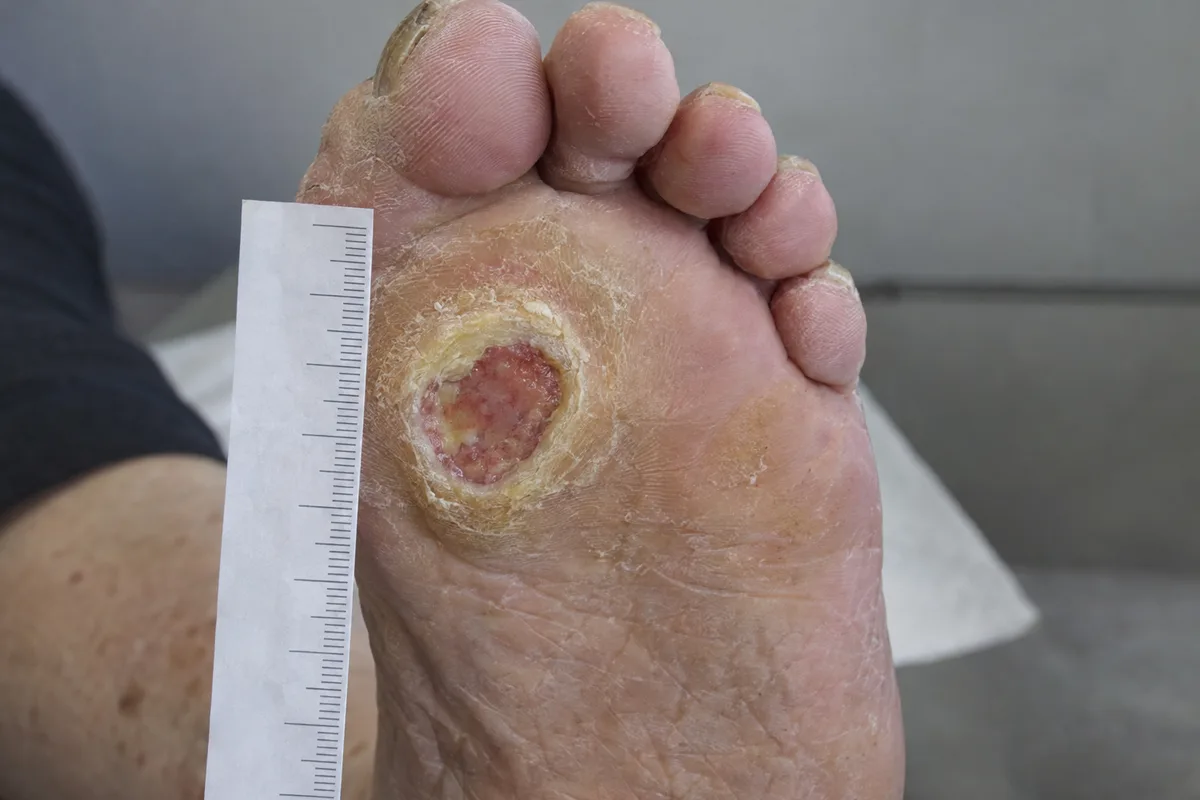
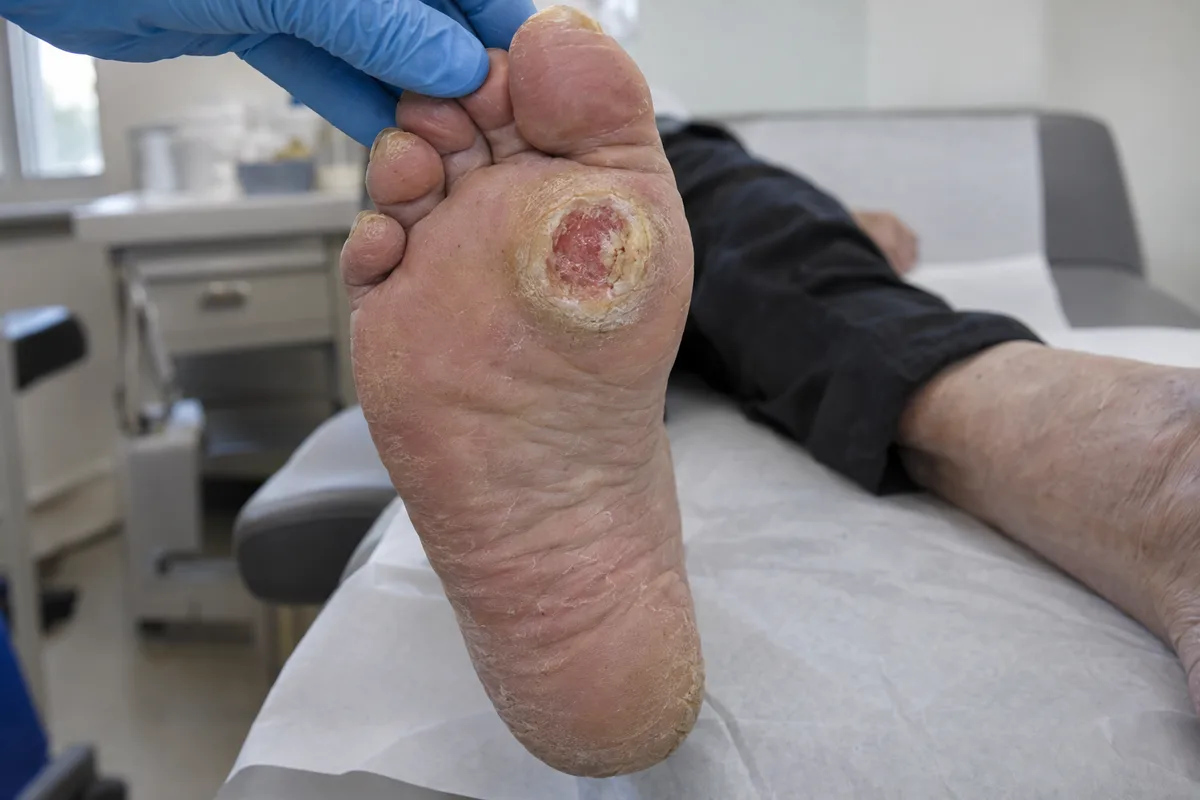
A diabetic ulcer usually starts small: a blister, a crack in dry skin, or a spot where a shoe presses day after day. Because diabetes can dull feeling and slow blood flow, that small break in the skin can grow and deepen before anyone notices it.
This is serious wound care, not everyday skin care. A diabetic ulcer can take weeks or months to close, and it needs attention every single day.
Every diabetic ulcer belongs under the care of a doctor, podiatrist or wound nurse. They check it regularly, measure it, decide how it is cleaned and dressed, and arrange the footwear or cast that takes pressure off it. The daily care at home follows their plan.
The aim of that daily care is simple to say and hard to keep up: keep the wound clean, protected and moist, keep pressure off it, and spot any change early.
A diabetic ulcer is a serious wound. Care for it every day, and never on your own.
Why Diabetic Ulcers Are Slow to Close
Three things diabetes changes, and each one keeps a wound open longer.
Not everyone has all three, but most diabetic ulcers involve at least two. Knowing them explains every step of the care routine below.
-
Reduced Feeling
When feeling is reduced, walking on a wound does not hurt the way it should. That is why off-loading and a daily look matter so much.
-
Slower Blood Flow
Cold feet, thin shiny skin and weak pulses in the feet can all be signs. Your care team may check circulation before deciding on a dressing plan.
-
Raised Blood Sugar
Good glucose control is part of wound care. Bring your wound to every diabetes check-up, and your glucose readings to every wound visit.
Keep the wound protected, moist and covered, take the pressure off it, and keep it under professional care.
Daily Care for a Diabetic Ulcer, Step by Step
Follow the plan your care team gives you. This is what the daily routine usually looks like.
Do it at the same time each day, in good light, with everything ready before you start.
Wash Your Hands
Wash and dry your hands well, or use clean gloves. Lay out the cream, the cover dressing and anything your care team asked you to use on a clean surface.
Remove the Old Dressing
Take it off gently. Look at it before you throw it away: the amount and color of fluid, and any smell, tell you and your care team how the wound is doing.
Clean the Wound
Clean it exactly the way your care team showed you, often with saline. Pat the skin around the wound dry, without rubbing.
Apply Dermaden®
Spread a thin, even layer over the wound bed. It settles into a protective NMBM layer that helps keep the wound moist and protected between dressing changes. Use it as directed on the pack.
Cover With a Breathable Dressing
Put a breathable secondary dressing on top, matched to how much fluid the wound gives off (see the table below). Change it every time you apply the cream.
Take the Pressure Off
Wear the off-loading shoe, boot or cast your care team prescribed every time you stand. Keep walking on the wound to the minimum, and rest with the leg raised.
Choosing the Cover Dressing
Dermaden® goes on the wound. A breathable dressing goes on top.
Match the cover to how much fluid the wound gives off, and change it at every application.
| The wound | Cover dressing | Good to know |
|---|---|---|
| Dry | Transparent film or paraffin gauze | Keeps the moist layer in place without sticking to the wound. |
| Light fluid | Non-woven gauze | Lets the wound breathe while catching a small amount of fluid. |
| Moderate fluid | Absorbent gauze or pad | Change it sooner if it is soaked through. |
| Heavy fluid or signs of infection | Ask your care team first | Don't apply anything new until the wound has been looked at. |
Taking the Pressure Off
Most diabetic foot ulcers form where weight presses. Taking that pressure away gives the wound a chance to close.
-
Off-Loading Footwear
A special shoe, boot or cast spreads your weight away from the wound. It only works if it is worn every time you stand, including the short trips around the house.
DoWear it for every step, as prescribedAvoidOrdinary shoes, slippers or walking barefoot on the wound -
Rest and Raise
Fewer steps means less pressure on the wound bed. When you sit, raise the leg on a stool or cushion, and plan the day so you stand and walk less while the wound is open.
DoSit with the leg raised, use a walking aid if advisedAvoidLong walks and long periods of standing -
Protect the Skin Around It
The skin around an ulcer is fragile too. Keep it clean and dry, check it at every dressing change, and look at the other foot as well: it is carrying more weight than usual.
DoCheck both feet every dayAvoidHot water bottles, heating pads and soaking the foot
The Research Behind Dermaden®
Where the NMBM formula has been tested, and how it is registered.
A randomised trial at Sheba Medical Center. Dermaden®'s Natural Matrix Bio-Polymer Membrane (NMBM) was tested against standard dressings on hard-to-close venous leg ulcers in a randomised pilot trial at Sheba Medical Center, Israel's largest hospital, published in the Journal of Wound Care in 2020. Read the published trial.
Registered in Israel as a wound dressing. In Israel, Dermaden® is registered with the Ministry of Health as a wound dressing whose listed uses include diabetic foot wounds, pressure sores, burns and necrotic wounds. In the US it is sold as a cosmetic.
Gentle on skin. In a 50-person, six-week patch study by the Israel Institute for Skin Research, no skin irritation or sensitization was observed.
Where Dermaden® Fits Into Diabetic Ulcer Care
Dermaden® Advanced Wound Care Cream is part of the daily dressing routine, under your care team's plan.
Here is what it does on the wound:
- Forms a protective barrier - a thin NMBM layer over the wound bed that acts like a light biological dressing
- Keeps the wound moist - the environment that supports the skin's natural recovery
- Naturally derived, no antibiotics - natural waxes, amino acids and fatty acids, made in Israel
- Simple to use - a thin layer, then a breathable cover dressing, as directed on the pack
A thin layer, then a breathable dressing. The NMBM film settles over the wound bed and helps keep it moist and protected between dressing changes.
We Ship Nationwide
All 50 states, direct to your door.
Sold directly to customers online, so your dressing supplies are easy to restock. 1.35 fl oz (40 ml) $49 · 3.38 fl oz (100 ml) $89. Order at dermadenus.com/shop.
Questions About Using Dermaden?
Caring for a diabetic ulcer at home is easier with a little help. We are happy to talk it through.
Call +1 (848) 389-6474 or email in**@********us.com. Related guides: bedsores and pressure sores, burns, and how Dermaden works.
Diabetic Ulcer Questions
What is a diabetic ulcer?
A diabetic ulcer is an open wound that is slow to close, most often on the feet or lower legs of people living with diabetes. Reduced feeling, slower blood flow and raised blood sugar all keep it open longer than an ordinary wound, so it needs careful daily wound care under a care team's plan.
Where do diabetic ulcers usually form?
Most form where weight and pressure land: the ball of the foot, the tips and tops of the toes, the heel and the sides of the foot where shoes press. They can also form on the lower legs.
Why are diabetic ulcers slow to close?
Diabetes can reduce feeling, so a wound grows before it is noticed and pressure keeps landing on it. It can slow blood flow, so less oxygen and nourishment reach the wound. And raised blood sugar slows the skin's natural recovery. That is why these wounds need daily care, pressure taken off them, and professional follow-up.
Should a diabetic ulcer always be seen by a professional?
Yes. Every diabetic ulcer belongs under the care of a doctor, podiatrist or wound nurse, who checks it regularly and sets the plan for cleaning, dressings and taking pressure off. Daily care at home follows that plan.
How is a diabetic ulcer dressed at home?
Wash your hands, remove the old dressing gently, clean the wound the way your care team showed you, apply a thin layer of Dermaden® Advanced Wound Care Cream, and cover it with a breathable secondary dressing matched to how much fluid the wound gives off. Then keep pressure off the area.
Can Dermaden® be used on a diabetic ulcer?
Dermaden® forms a protective NMBM layer over the wound and helps keep it moist. In Israel it is registered with the Ministry of Health as a wound dressing whose listed uses include diabetic foot wounds. In the US it is sold as a cosmetic. Use it as part of the plan your care team gives you, as directed on the pack.
Which cover dressing goes over Dermaden®?
A breathable one matched to the wound: transparent film or paraffin gauze for a dry wound, non-woven gauze for light fluid, and absorbent gauze or a pad for moderate fluid. Change the cover dressing every time you apply the cream.
Which signs mean a diabetic ulcer needs urgent attention?
Spreading redness, warmth or swelling, pus or a bad smell, fever or chills, skin that turns black or dark, or a wound that is getting bigger. Call your care team the same day, or emergency services if you feel unwell.
Why is taking pressure off the ulcer so important?
Every step on an ulcer presses on the wound bed again. Off-loading footwear, casts or boots prescribed by your care team, and resting with the leg raised, take that pressure away and give the wound a chance to close.
Does Dermaden® contain antibiotics?
No. Dermaden® is naturally derived, made in Israel from natural waxes, amino acids and fatty acids, and contains no antibiotics. It works as a physical protective layer over the wound.
