 Derma Den USA
Minor Burn Care at Home - How to Care for a Small Burn: Cool It, Protect It, Cover It
Kitchen splashes, a hot pan handle, a curling iron, a cup of coffee in a small child's reach. Most small burns can be looked after at home. This guide walks through what to do minute by minute, how to look after blisters, which dressing to use, what normal recovery looks like day by day, and where Dermaden® fits in.
Three steps after a minor burn
- Cool
- Protect
- Cover
What Happens to the Skin in a Minor Burn
Heat stays in the skin after the burn. Cooling draws it out. After that, the job is to keep the area protected, moist and comfortable.
A minor burn, from heat to protected skin
Skin is built in layers. The top layer, the epidermis, is thin and constantly renewing itself. Below it sits the thicker dermis, with nerve endings, small blood vessels and the structures that keep skin flexible. Burns are described by how deep into those layers the heat reached.
The burn does not stop the moment you pull your hand away. Skin holds on to heat, so for several minutes after a splash or a touch the damage can keep spreading a little deeper. That is why cooling straight away under running water matters more than anything you put on afterwards.
Once the heat is out, the skin's priority changes. Burned skin loses moisture quickly and the surface can tighten, dry and crack. A covered surface that stays slightly moist is more comfortable, moves more easily and is protected from rubbing and dirt while the skin renews itself underneath.
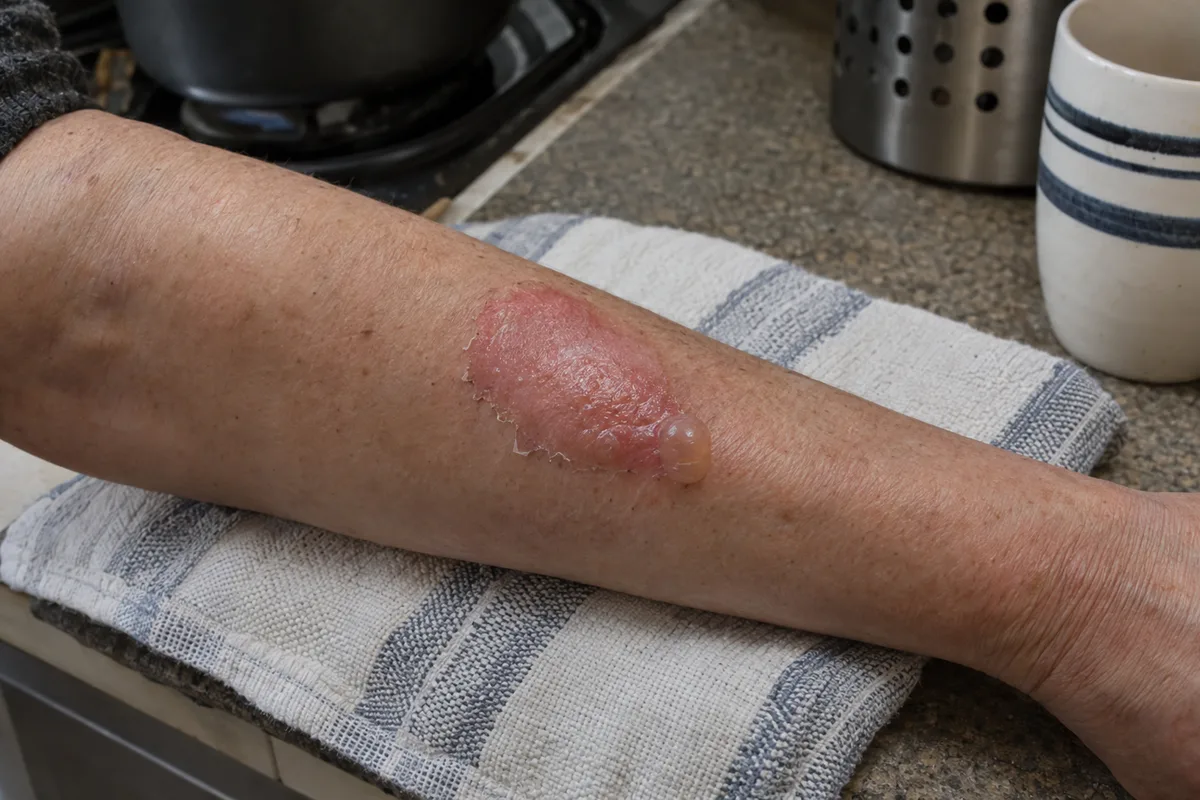
A burn is generally the kind people look after at home when it is smaller than the palm of the hand, is not on the face, hands, feet, groin or over a major joint, and was caused by heat (a hot surface, liquid, steam or the sun) rather than chemicals or electricity.
Cool it first. Then protect it with a thin layer of Dermaden® and a light, breathable cover.
What to Do After a Burn, Minute by Minute
The first 20 minutes shape the next two weeks. Here is the order that works.
- 0 min
Move away from the heat source and get the area under cool running tap water straight away. Do not wait to see how bad it is.
- 1 to 20 min
Keep it under the water for 10 to 20 minutes. Cool, not ice cold. A gentle stream is enough. If you cannot reach a tap, a clean cool compress changed often is the next best thing.
- While cooling
Take off rings, watches, bracelets and tight clothing near the area before it swells. Leave anything that is stuck to the skin where it is.
- 20 to 30 min
Pat the area dry with a clean, lint-free cloth. Do not rub. Look at it: redness only, or blisters too?
- First hour
Apply a thin layer of Dermaden® and cover with a non-stick, breathable dressing. Keep the area raised if it is a hand or foot.
- That evening
Check the dressing. Change it if it is wet, stuck or dirty, and reapply a thin layer.
Cool running water
10 to 20 minutes, straight away. Cool, not ice cold.
First-Degree vs Second-Degree Burns: How to Tell
Most household burns are first-degree or small second-degree. The difference decides how you look after them.
| Feature | First-degree burn | Small second-degree burn |
|---|---|---|
| Layer affected | Top layer of skin only (epidermis) | Top layer and part of the layer below (dermis) |
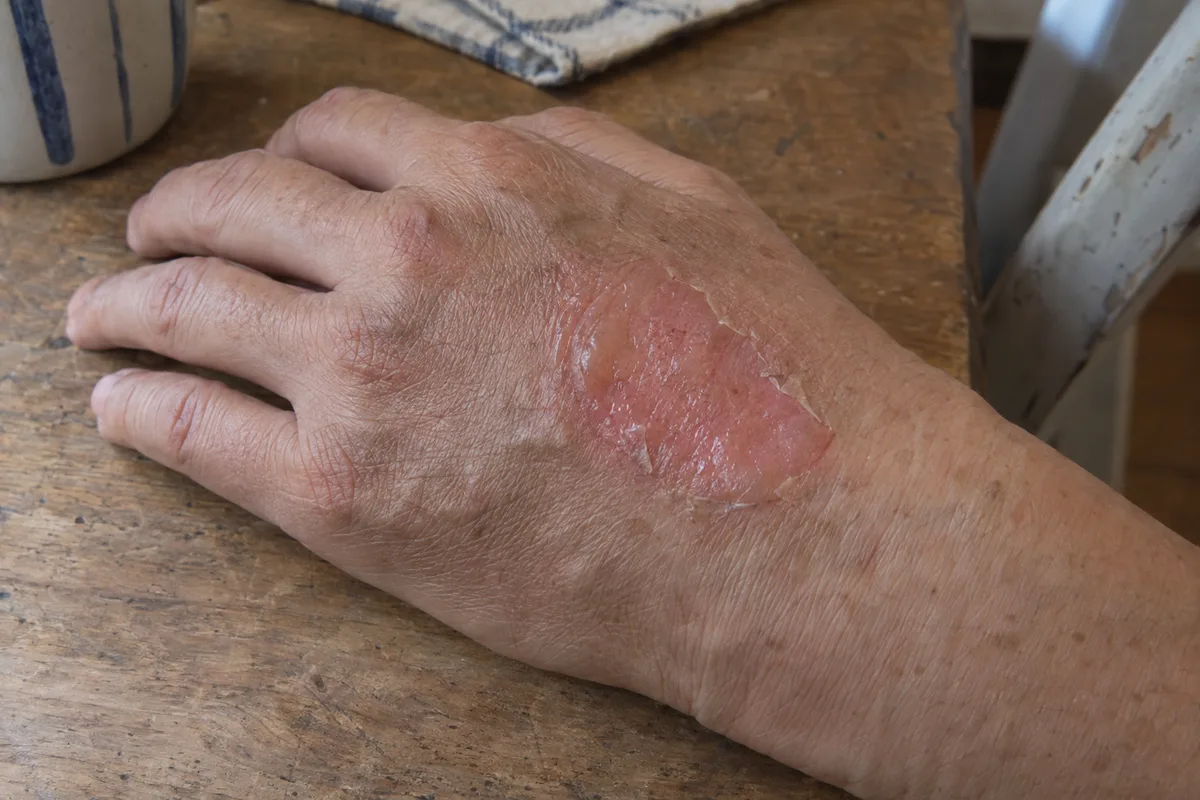
| How it looks | Red or pink, dry, no blisters. Turns white briefly when pressed. | Deep red, blotchy, shiny or wet. Blisters form, sometimes hours later. |
| How it feels | Sore and warm to the touch, like a mild sunburn | More sore, tender and sensitive to air and touch |
| Typical causes | Brief touch of a pan, curling iron or oven rack; mild sunburn | Hot liquids, oil splashes, steam, longer contact with a hot surface |
| Usual recovery | About 3 to 6 days. May peel like sunburn. | About 1 to 3 weeks. New skin is pink and delicate at first. |
| Home care focus | Cool, keep moist, light cover if it rubs | Cool, protect the blister, non-stick dressing, change daily |
Everyday Burns and How to Handle Each One
The cause changes the details. The routine stays the same: cool, protect, cover.
Burns at home cluster around a handful of situations: cooking, hair styling, hot drinks, steam and the sun. Each has its own quirks, from how long the heat lingers to where on the body it usually lands.
Hot Pan or Oven Rack
A quick touch usually gives a first-degree burn on the fingers or forearm. Cool for the full 10 minutes even if it feels better sooner, because the heat sits in the skin.
Oil or Grease Splash
Oil runs hotter than boiling water and clings to skin, so splashes often blister. Rinse the oil off under the tap while cooling, then protect any blisters.
Hot Coffee, Tea or Soup
Spills soak into clothing and keep burning. Pull wet clothing away from the skin (unless stuck) and cool through the area. Common in children reaching for mugs.
Curling Iron or Straightener
Small, sharp-edged burns on the neck, ear, forehead or fingers. Cool, then a thin layer and a small non-stick cover; on the face, skip the dressing and reapply the cream instead.
Steam From a Kettle or Microwave Bowl
Steam burns cover a wider area than they first seem, often the wrist or inner arm. Cool the whole reddened area, not just the spot that stings most.
Sunburn
A wide, dry first-degree burn. Cool shower, drink water, stay in the shade, then a thin layer of Dermaden® to keep the skin from drying out and feeling tight.
Burn Blisters: Why Not to Pop Them
A blister is the skin's own sterile dressing. Leaving it intact is the kindest thing you can do.
The fluid inside a burn blister is the body's own response to the heat. The roof of the blister, that thin dome of skin, protects the raw layer underneath from air, rubbing and dirt while new skin forms below it.
Popping it on purpose removes that protection and leaves a moist, exposed surface that is uncomfortable and easily irritated. Small blisters usually flatten on their own within a few days as the fluid is reabsorbed.
Protect blisters from pressure with a non-stick pad, and avoid tight shoes or straps over them. If a blister is in a spot that keeps rubbing, a slightly thicker, cushioned dressing helps it stay intact.
If a blister breaks by itself
- 1Wash your handsThen rinse the area gently with clean, cool running water. No scrubbing.
- 2Leave the skin flap in placeThe loose skin still protects the surface underneath. Do not peel it off.
- 3Pat dry and apply a thin layerA thin layer of Dermaden® keeps the exposed area moist and comfortable.
- 4Cover with a non-stick dressingChange it daily, or sooner if it gets wet or dirty.
Burn Aftercare: Protecting the Skin in the Days After
A minor burn needs a few days of simple, steady care.
Here is what that looks like in practice:
- Wash your hands first, then rinse the area gently with clean water. Pat dry, do not rub.
- A thin layer of Dermaden®, 1 to 3 times a day, as directed on the pack.
- A breathable, non-stick dressing over the cream, changed daily or when wet or dirty.
- Loose clothing over the area so nothing rubs or sticks to it.
- Drink enough water, especially after sunburn or a burn over a wider area.
- Leave peeling skin alone. Let it come away on its own instead of pulling it.
- Do not scratch as it starts to itch. A fresh thin layer helps the dry, tight feeling.
- Shade the new skin from the sun for several months. Fresh skin burns and darkens easily.
Cooled skin underneath. A thin Dermaden® layer to keep it moist and comfortable. A light dressing on top to keep it clean. Three layers, one simple routine.
Which Dressing to Use on a Burn
The best burn dressing is one that will not stick to the surface, lets the skin breathe and holds a thin layer of cream in place. Change it once a day, or sooner if it gets wet, dirty or starts to stick.
Non-Stick Pad
A soft pad with a shiny, non-adherent face, held with paper tape or a light gauze wrap. Easy to change and gentle when it comes off.
Best for: small first-degree and blistered burns
Gauze Roll Over a Pad
A non-stick pad wrapped loosely with a gauze roll keeps cream in place on fingers, wrists and forearms without any tape touching the burn.
Best for: hands, arms, steam burns on the wrist
Cushioned Foam Dressing
A thin foam dressing adds padding where clothing, shoes or straps press, and helps an intact blister stay intact.
Best for: feet, ankles, waistband or bra-strap areas
Avoid fluffy cotton wool or plain gauze directly on a burn: fibers stick to the surface and pull when removed. On the face, most people skip the dressing and simply reapply a thin layer during the day.
What Normal Burn Recovery Looks Like, Day by Day
Knowing what to expect makes it easier to stay patient and keep the routine going.
- Day 1
Red and Warm
The area is red, tender and warm. Blisters on a second-degree burn may appear over the first hours.
- Days 2 to 3
Settling
Redness starts to calm. Blisters may fill or flatten. The skin feels tight and dry.
- Days 4 to 7
Peeling and Itching
First-degree burns peel like sunburn. Itching is common as the surface renews.
- Week 2
New Pink Skin
Small second-degree burns show shiny, pink new skin. It is thin and delicate.
- Weeks 3 and on
Evening Out
Color slowly evens out over weeks to months. Keep the area moisturized and shaded.
Burn Myths: Ice, Butter, Toothpaste and Aloe
Many home remedies passed down in families do more harm than good. Here is what each one actually does.
- MythPut ice on itFactIce and ice water are too harsh on burned skin and can damage it further. Cool tap water is the right temperature.
- MythButter or oil soothes a burnFactFats trap heat in the skin and are hard to wash off later. Cool water first, then a proper wound care cream.
- MythToothpaste cools it downFactToothpaste contains ingredients that can irritate burned skin. The cool feeling is short-lived.
- MythEgg white seals the burnFactRaw egg is not clean and dries to a crust that is hard to remove. Leave it in the kitchen.
- MythAloe straight awayFactNothing goes on before the 10 to 20 minutes of cool running water. Creams and gels come after cooling, never instead of it.
- MythLet it breathe uncoveredFactA burn left open dries, cracks and catches on clothing. A moist, covered surface is more comfortable.
Burns in Children and Older Adults
Thinner skin burns faster and deeper. A few extra habits make a real difference.
Children
- Hot drinks are the top cause. Keep mugs and kettles at the back of counters, and never hold a hot drink while holding a child.
- Cool for the full 20 minutes, but keep the rest of the child warm with a towel so they do not get chilled.
- Check bath water with your elbow before a child gets in, and set the water heater no higher than 120°F (49°C).
- Use a smaller, softer dressing and change it at a calm time of day, like after a bath.
- Follow the directions on the pack for use on children.
Older Adults
- Aging skin is thinner and drier, so a short contact can cause a deeper burn than expected.
- Reduced feeling in hands or feet means a hot water bottle or heating pad can burn without being noticed. Use a cover and limit the time.
- Use paper tape or a gauze wrap rather than sticky plasters, which can tear fragile skin when removed.
- Keep the area moisturized after recovery, because older skin stays dry and fragile for longer.
- Check burns daily for anyone who cannot easily see or reach the area themselves.
How to Use Dermaden® on a Minor Burn
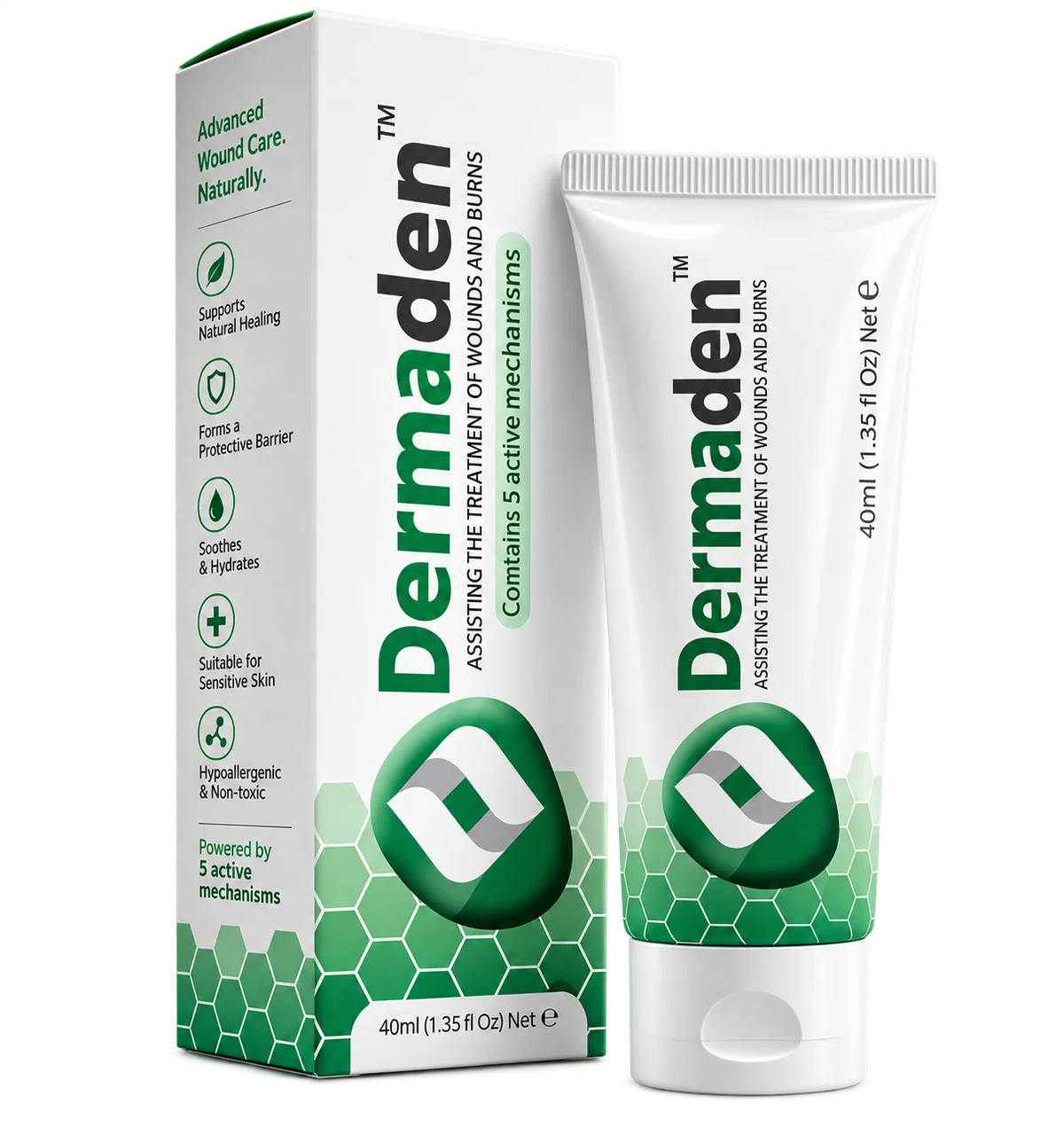
Dermaden® Advanced Wound Care Cream forms a thin protective barrier over the skin, using what the maker calls NMBM (Natural Matrix Bio-Polymer Membrane) technology.
-
A Light, Temporary Dressing
A thin layer acts like a light, temporary dressing. It helps keep the area moist and soothed, helps manage excess fluid at the surface and helps maintain a balanced environment for the skin's own natural recovery.
Read more on how Dermaden works.
-
When to Apply It
After the burn has been cooled under running water and gently cleaned and dried. Then one to three times a day, as directed on the pack, each time you change the dressing.
-
Three Simple Steps
Cool and Clean
Cool under running water, rinse gently and pat the skin dry.
Apply a Thin Layer
Spread a thin layer of Dermaden® over the area, as directed on the pack.
Cover It
Use a breathable, non-stick dressing. Change it when it is wet or dirty.
We Ship Nationwide
All 50 states, direct to your door.
Keep a tube of Dermaden® in the kitchen drawer, ready when you need it. We ship to every state, directly from us to you, and our own team answers the phone at +1 (848) 389-6474. See also our guides to diabetic ulcers and bedsores, or go back to the wound care overview.
Questions About Using Dermaden?
Tell us what happened and we will explain how people use Dermaden® on minor burns.
Call us at +1 (848) 389-6474 or email in**@********us.com. If you would rather write, use the form and a real person on our team will get back to you.
Burn Care Questions
How long should I run a burn under cold water?
Keep it under cool, not ice-cold, running tap water for 10 to 20 minutes, starting as soon as possible. Even if it feels better after a minute or two, the heat is still in the skin, so finish the full time.
Should I cover a burn or let it breathe?
Cover it. A minor burn kept slightly moist under a breathable, non-stick dressing is more comfortable and is protected from rubbing and dirt. An open burn dries out, cracks and catches on clothing.
Should I pop a burn blister?
No. The blister roof protects the delicate skin underneath. Protect it with a non-stick pad. If it breaks by itself, rinse it gently, leave the loose skin in place, apply a thin layer of cream and cover it.
What does a second-degree burn look like?
A second-degree burn is deep red, blotchy, shiny or wet-looking and forms blisters, sometimes a few hours after the burn. A first-degree burn is red and dry with no blisters, like a mild sunburn.
How long does a minor burn take to recover?
A first-degree burn usually settles in about 3 to 6 days and may peel. A small second-degree burn usually takes about 1 to 3 weeks, and the new pink skin keeps evening out in color over the following weeks and months.
How often should I change a burn dressing?
Once a day is usual, and any time it gets wet, dirty or starts to stick. Reapply a thin layer of Dermaden® each time you change it.
Can I put butter, toothpaste or ice on a burn?
No. Ice is too harsh on burned skin, butter and oil hold heat in, and toothpaste can irritate. Cool running water is the right first step, followed by a proper wound care cream and a clean dressing.
When can I apply Dermaden® to a burn?
After the burn has been cooled under running water for 10 to 20 minutes and gently cleaned and patted dry. Apply a thin layer 1 to 3 times a day, as directed on the pack, and cover with a breathable dressing.
Can I use Dermaden® on sunburn?
Yes. After a cool shower, a thin layer helps keep sun-dried skin moist and comfortable. Drink plenty of water and stay in the shade while the skin settles.
Why is my burn itchy?
Itching is common as a burn recovers and the surface dries and renews. Keep the area moisturized with a thin layer, wear loose clothing over it and try not to scratch or pick at peeling skin.
